Morning routine for kids: a calmer start to the day
Most families know the rushed morning: reminders, tears, and a rush out the door. The missing piece is often a sequence the child can see. A short visual schedule makes the morning predictable. You can start on paper with our free morning schedule PDF, or use the app so you are not reprinting every week.
Why a fixed morning routine helps
Children settle when they know what comes next. When each moment has a place in the order, they do not have to guess or negotiate every step. The same sequence, day after day, is what turns a list into a habit.
A visible routine also cuts the number of spoken reminders. Instead of saying “brush your teeth” again, you both look at the next picture. The child leads the step. You stay nearby without running the whole morning out loud.
Example morning schedule
Six steps, roughly ages 3–8
- Get up
- Toilet and wash hands
- Get dressed (socks, then trousers, then top)
- Breakfast
- Brush teeth
- Coat, shoes, bag — ready to go
Match the length to the child. Many preschoolers do better with four or five steps. School-age children can hold a longer list once the order is familiar.
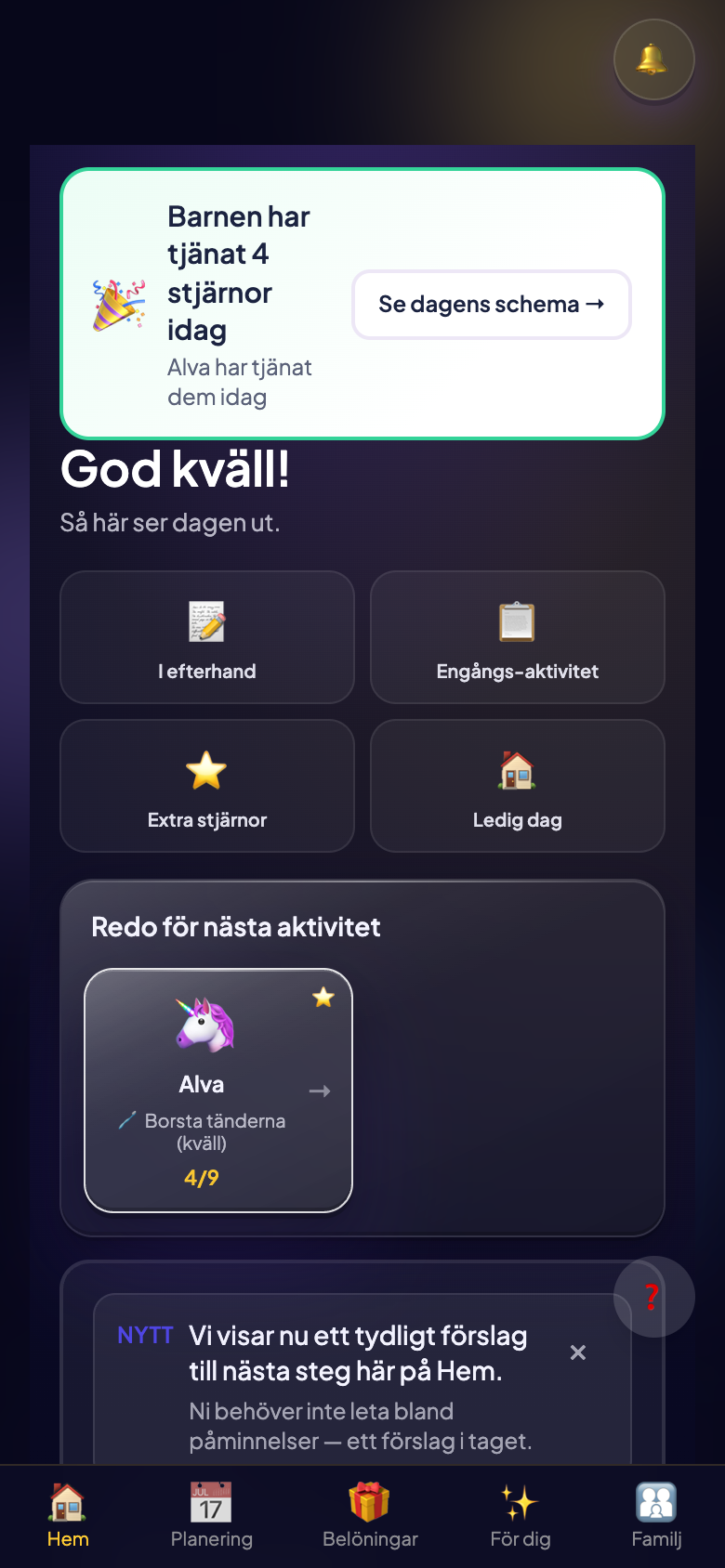
Picture support for the morning
A visual morning schedule shows each step as a picture. The child sees what applies now and what comes after. That takes the job of “living reminder” off you.
- Use pictures the child already recognises — photos from home work well.
- Keep the list short. Three steps that happen beat seven that are ignored.
- Put the schedule where they see it on waking: a phone by the bed, or a print on the wall.
For the wider idea, read the visual schedule app guide.
Five ways to make the morning quieter
- Break the morning into concrete steps. Fewer and clearer is better.
- Use pictures. A visual schedule works for children who are not reading yet.
- Prepare the night before. Clothes out, bag packed — fewer decisions at 7am.
- Show progress. A reward chart with stars makes the effort visible.
- Keep a similar order at the weekend. Predictability is what builds the habit.
When a step gets stuck
If getting dressed is the wall, more reminders rarely help. Try this instead:
- Split the step. “Get dressed” becomes three pictures: socks, trousers, top.
- One at a time. Hide later steps until the current one is done. The app can focus on Now and Next.
- Point, don’t narrate. “What does your picture say?” instead of repeating the instruction.
- Count the try. A star for attempting the step, not only for a perfect result.
Families who want more structure around focus or transitions can read visual schedules for ADHD and autistic children. My Starday is a daily support, not a treatment, and it does not promise a particular result.
How My Starday fits
Build the morning as a visual schedule. The child ticks each step, collects stars, and sees progress in the Treasure Chamber. You can get a nudge when a step is done without standing over the whole routine.
Questions parents ask
Set up a morning routine
Free until 31 December 2026. No payment required during the free period.
Get My Starday