Visual schedules for ADHD and autistic children
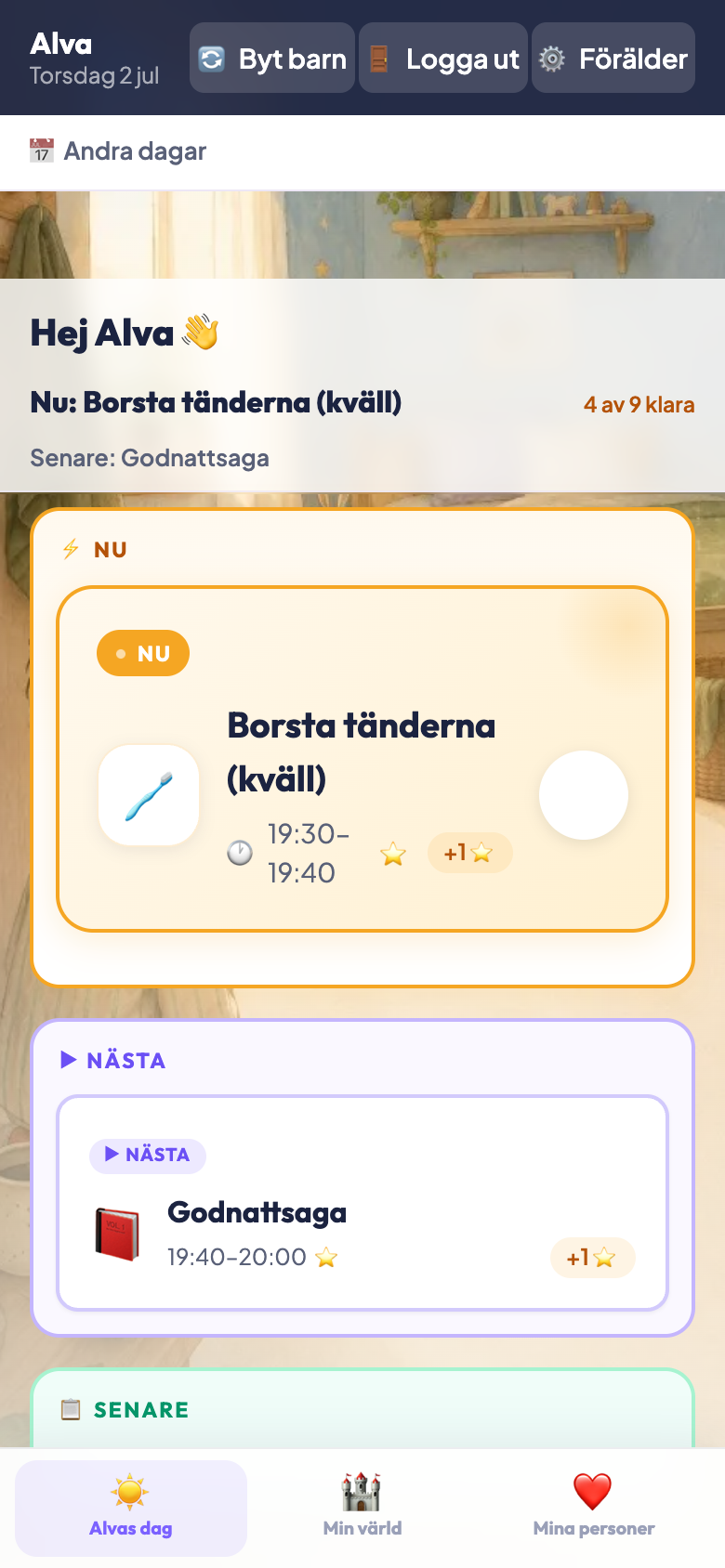
Mornings full of reminders, hard transitions, and distress when something changes are familiar in many homes. For children with ADHD or autism, being able to see what happens now and next often matters. A clear visual schedule can take some of that load off both of you. It is a practical tool, not a therapy and not a promise of a particular outcome.
Why predictable routines help
Planning, starting, holding several steps in mind, and switching activities can take more effort for some children. That is not unwillingness. An external picture sequence gives the order a place to live outside the child’s head.
When the child can see what is happening now and what comes next, there are fewer surprises. Fewer surprises often means fewer blow-ups at the join between activities. That is a support, not a medical result we can guarantee.
Principles that tend to help
- Show it. Pictures are easier to take in than a spoken list. A visual schedule shows the block of the day at a glance.
- Prepare transitions. The join between activities is often the hard part. Warn ahead and show the next picture. First-then cards are a simple paper version.
- Split big steps. “Get ready” becomes socks, then trousers, then top.
- Keep the order steady. The same sequence builds familiarity.
- Make effort visible. A star reward chart shows progress without turning the routine into a bribe in the moment.
ADHD: starting and staying with the step
Children with ADHD often stall between activities because the next step is not obvious, not because they do not care. A visual schedule with a tick gives immediate feedback: this step is done.
- Keep each block short — about five or six steps for morning, after school, or bedtime.
- Count the attempt, not only a perfect finish.
- Use the same weekday order, and explain a change before it happens.
Autism: predictability and transitions
Many autistic children do better when the day is knowable. A changed order or a cancelled step can feel large. A weekly visual schedule shows what kind of day it is before it starts.
- Preview tomorrow the evening before: “Tomorrow is swimming.”
- Show the next step instead of repeating the instruction.
- Leave time at transitions — a timer plus a picture for “soon we stop”.
Home, school, and therapists
Children often do better when the adults around them use a similar picture language. My Starday lets a parent share routines with educators and therapists so more than one adult can see the same structure. Sharing is optional and controlled by the parent.
Printable supports
The app does not include a full TEACCH work system. TEACCH-inspired first, then, and finished cards are available as printable templates. They are inspired by that approach. They are not an official method and not a certification.
Questions parents ask
A routine the child can see
Free until 31 December 2026. No payment required during the free period.
Get My Starday